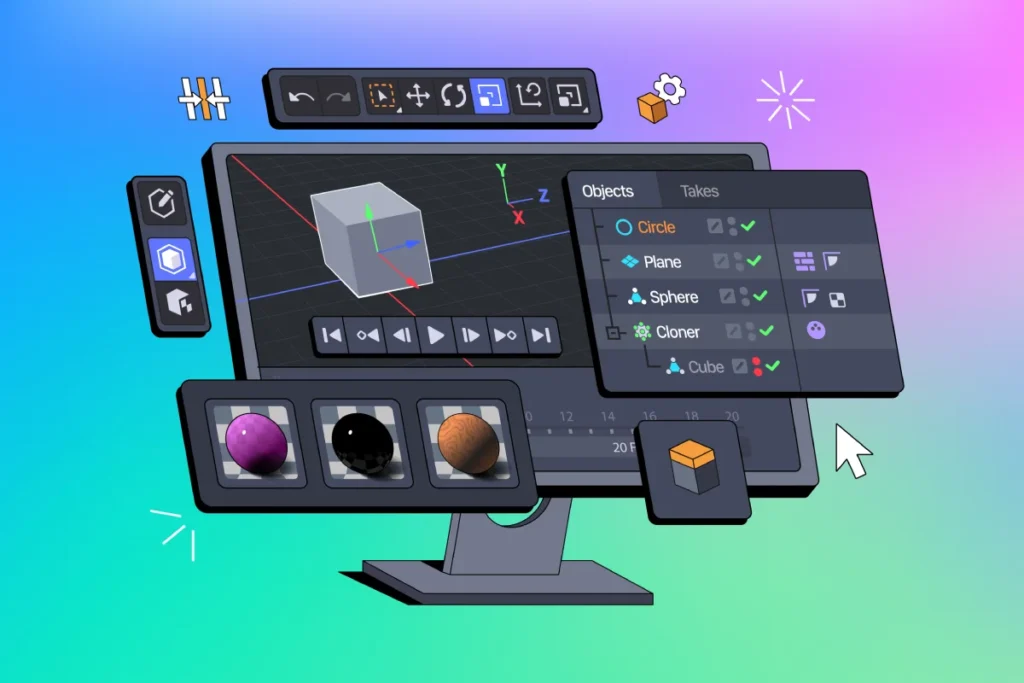
Visual Effects (VFX) is evolving faster than ever. What once required giant studios, heavy machines, and complex pipelines can now be achieved with smarter software, AI-driven workflows, and next-gen tools. Whether you dream of working in films, OTT, gaming, advertising, or digital media, mastering the right tools will define your success in 2025 and beyond.
If you want to be a studio-ready VFX artist, this updated list covers the 10 essential software tools shaping the future of the industry, and why you can’t afford to ignore them.
1. Nuke – The Industry’s Gold Standard for Compositing
If VFX had a Mount Everest, Nuke would sit at the top. Used by almost every major studio worldwide, Nuke is a node-based compositing monster capable of handling the most complex visual effects sequences.
Why You Must Learn It
- Essential for film-level compositing
- Perfect for multi-layered shots
- Real-time script-based workflow
- Supports 3D compositing and deep compositing
- Industry requirement for high-end VFX roles
It’s not just a tool, it’s the backbone of modern VFX pipelines.
2. Blender – The Free, Powerful 3D Beast
The rise of Blender has changed the 3D world. This open-source software now rivals expensive 3D tools and is a favorite among freelancers, hobbyists, and even studios looking for speed and flexibility.
Why You Must Learn It
- Free (yes, genuinely free)
- Complete 3D animation suite
- Sculpting, modeling, rigging, lighting, rendering
- Powerful Grease Pencil for 2D/3D hybrid animation
- Massive global community and endless plugins
Blender continues to dominate because it gives artists total freedom with zero cost barriers.
3. Houdini – King of Procedural Magic
For anyone interested in simulations, particles, destruction, water, fire, explosions, smoke, or crowd systems, Houdini is the absolute heavyweight.
Why You Must Learn It
- Procedural generation makes effects reusable
- Used extensively in Hollywood blockbusters
- Handles large-scale VFX simulations
- Perfect for studios needing complex physics-based effects
Houdini artists are among the highest-paid professionals in the VFX industry due to the complexity and demand for simulation work.
4. Mocha – Roto & Tracking Made Smart
Mocha simplifies one of the most tedious parts of VFX: planar tracking and rotoscoping. It’s the industry’s favorite sidekick tool for cleanup tasks, screen replacements, and stabilization.
Why You Must Learn It
- Planar tracking engine with insane accuracy
- Perfect for roto-heavy production
- Integrates with Nuke, After Effects, and Silhouette
- Saves hours of manual labor
If your career involves Roto or Cleanup, Mocha becomes your best friend.
5. Silhouette – The Roto Artist’s Weapon
Silhouette is a specialized tool for professional rotoscoping and paint tasks. Major studios rely on it for high-precision work, making it a critical skill for anyone aiming to join top VFX companies.
Why You Must Learn It
- Deep tools for Roto, Paint, and Tracking
- Ideal for film-quality shots
- Perfect for motion blur, hair roto, and element isolation
- Integrates seamlessly into compositing pipelines
If you want to specialize in Roto & Paint, Silhouette is non-negotiable.
6. After Effects – Motion + VFX for Digital Content
After Effects is the creative all-rounder of the post-production world. While Nuke dominates film pipelines, After Effects rules advertising, motion graphics, social media content, and digital campaigns.
Why You Must Learn It
- Essential for motion graphics
- Perfect for compositing lightweight VFX
- Widely used in marketing & digital agencies
- Expansive plugin ecosystem (Red Giant, Trapcode, Element 3D)
It’s the go-to tool for creative, fast-paced content creation.
7. Unreal Engine – Real-Time Cinematics Are the Future
Real-time rendering has exploded, and Unreal Engine is leading the revolution. Films, games, virtual sets, and even ad shoots are now created using Unreal’s cinematic tools.
Why You Must Learn It
- Real-time rendering means zero wait time
- Perfect for virtual production
- Amazing for environmental creation
- Widely used in AI filmmaking
- Powerful cinematic camera system
Studios are hiring Unreal artists rapidly, especially post-2023.
8. DaVinci Resolve – The Color God
VFX isn’t complete without color. Resolve is the top color grading tool used in films, commercials, and OTT projects. Its node-based workflow makes it a must-learn for VFX artists and editors.
Why You Must Learn It
- Most powerful color grading tool
- Free version available
- Integrates with VFX and editing flow
- Used in professional film pipelines
Every VFX artist benefits from understanding color theory and grading.
9. Photoshop – The Foundation of All Visual Work
From concept art to matte painting, texture creation, cleanup work, and poster design, Photoshop remains a timeless essential.
Why You Must Learn It
- Perfect for creating textures & elements
- Used in matte-paint and environment design
- Essential for concept art
- Works as a companion tool for all VFX software
It’s still the backbone of visual storytelling.
10. AI Tools – The New VFX Superpower
AI tools are rapidly becoming part of the VFX pipeline. They accelerate workflows, assist with creativity, and automate time-consuming tasks.
AI Tools You Should Explore
- Runway – AI video generation
- Pika Labs – AI animation
- Stable Diffusion – visual design
- Midjourney – concept creation
- Cleanup tools – automatic roto, mask & remove objects
Why You Must Learn Them
- Accelerate pre-viz
- Create instant concepts & storyboards
- Automate cleanup & roto tasks
- Speed up editing & compositing
- Boost creativity with rapid ideation
AI won’t replace artists, but artists using AI will outpace those who don’t.
How These Tools Shape Your VFX Career
By mastering even half of these tools, you enhance your value as:
- Compositor
- Roto & Paint Artist
- 3D Generalist
- CG Artist
- Motion Designer
- AI Filmmaker
- Colorist
- Video Editor
- VFX Supervisor (long-term)
Studios today want artists who understand both creativity and technology, and these tools are exactly what the industry is built on.
Which Tools Should You Learn First?
If you’re new to VFX, here’s the ideal roadmap:
Start with the Basics
- Photoshop
- After Effects
- Blender
Move to Film-Level Tools
- Nuke
- Mocha
- Silhouette
Advance into 3D & Simulation
- Houdini
- Unreal Engine
Accelerate with AI
- Runway
- Midjourney
- Pika
This order builds a strong, industry-ready foundation.
Final Thoughts
The VFX industry in 2025 is bigger, faster, and more creative than ever. Mastering the right tools gives you an edge, helps you stand out, and prepares you for real studio production. Whether you dream of working on blockbuster movies, high-end ads, or your own creative projects, these tools are your ticket into the world of professional VFX.
Technology will keep evolving, but the artists who learn to use it will shape the future.